Family History
Preserving Family Stories Before Dementia: A Complete Guide for Families

When a parent or grandparent gets a dementia diagnosis, there's often a sudden urgency to capture their stories before more memories slip away. It's not too late to start. With the right approach, you can preserve family history even as memory changes progress. This guide covers practical strategies, services that work for families facing memory loss, and how to make the process comfortable.
Key Takeaway
Early and mid-stage dementia patients often retain vivid long-term memories even as short-term memory fades. Phone-based memoir services and guided conversations can unlock decades of stories that might otherwise be lost. The most important step is starting now.
Why Long-Term Memories Persist in Dementia
Long-term memories, particularly those tied to strong emotions, often remain accessible well into dementia's progression. A parent who can't remember what they had for breakfast may vividly recall their wedding day, their first job, or the house they grew up in.
Family history preservation is possible, and it can be therapeutic too. Reminiscence therapy (recalling and discussing past experiences) has been shown to reduce agitation, improve mood, and strengthen connections between patients and their families.
What works: short, relaxed sessions focused on familiar topics from the past, rather than forcing recall of recent events.
When to Start: The Sooner the Better
If you've noticed early signs of memory loss in a parent or grandparent, now is the time to begin preserving their stories. Here's a general timeline of what to expect:
- Early stage: Your loved one can participate in full conversations and recall detailed stories. This is the ideal time to capture comprehensive narratives, family history, and life lessons.
- Mid stage: Conversations may be shorter, but familiar topics from the past can still spark vivid recollections. Guided questions and a patient interviewer are essential.
- Later stage: Full conversations become difficult, but fragments of memory, favorite songs, and emotional responses can still be captured and treasured.
Don't wait for the "right time." Every conversation you have now is one your family will be grateful for later.
Best Approaches for Preserving Stories with Memory Loss
1. Phone-Based Memoir Services
For families dealing with dementia, phone-based services are often the most effective option. They require no technology skills, no screen interaction, and the familiar act of answering a phone call can feel natural and comfortable.
Tell Mel is specifically designed for elderly storytellers. Mel calls your loved one weekly for gentle, guided conversations that feel like chatting with a friend. The interviewer adapts to your loved one's pace, follows up on stories naturally, and transforms each conversation into a professionally written memoir chapter. For families dealing with memory loss, Tell Mel's approach is especially valuable because:
- No tech barrier: Your loved one just answers the phone. No apps, no logins, no screens.
- Adaptive conversations: Mel adjusts the conversation based on how your loved one is feeling that day.
- Short, comfortable sessions: Calls can be as short as 15 minutes, perfect for those with limited attention spans.
- Multilingual support: If your parent is more comfortable in their native language, Tell Mel conducts interviews in 10 languages.
2. Guided Family Conversations
You don't need a service to start preserving memories. Simple, intentional conversations during family visits can capture valuable stories. Some tips:
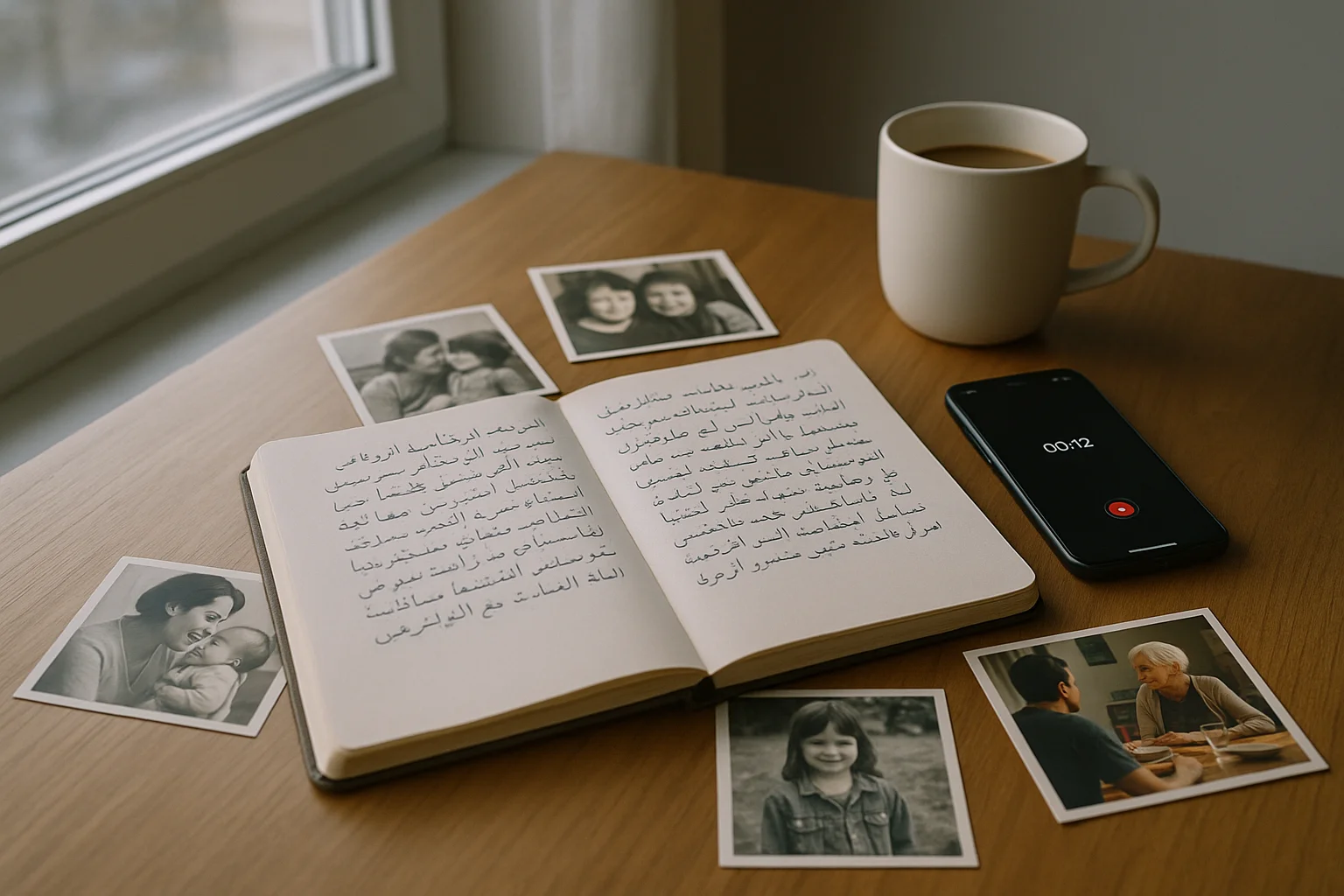
- Use sensory triggers: Old photos, music from their youth, familiar foods, or family heirlooms can unlock vivid memories.
- Ask about the past, not the present: "Tell me about your first car" will yield better results than "What did you do yesterday?"
- Record the conversation: With your loved one's permission, use your phone's voice recorder to capture their words.
- Keep it short: 15-20 minute sessions work better than hour-long marathons that can cause fatigue.
- Follow their lead: If they want to talk about the same story again, let them. Repetition is natural and the details may differ each time.
3. Legacy Video Recording
If your loved one is comfortable with being filmed, short video recordings can capture not just their words but their expressions, gestures, and voice. Services like StoryCorps offer structured approaches to video-based family history preservation.
4. Memory Boxes and Photo Albums
A physical memory box with photos, letters, and meaningful objects works as both a preservation tool and a conversation starter. Going through these items together often sparks stories that wouldn't come up otherwise.
Tips for Interviewing a Loved One with Memory Loss
Whether you're using a service or doing it yourself, these guidelines will help make the experience positive for everyone:
- Choose the right time of day: Most people with dementia are sharpest in the morning. Schedule conversations when they're most alert.
- Create a calm environment: Minimize background noise and distractions. A quiet room with familiar surroundings works best.
- Don't correct or quiz: If details don't match what you remember, that's okay. The goal is to capture their version of events, not to fact-check.
- Celebrate every story: Even fragments are valuable. A single vivid memory about a childhood holiday can be a treasure for grandchildren who never heard it.
- Be patient with repetition: Hearing the same story multiple times is part of the process. Each telling may reveal new details.
- Watch for signs of distress: If a topic causes anxiety or confusion, gently redirect to a happier memory.
What Families Are Saying
Families who have used memoir services for loved ones with memory loss often say the process did more than create a record. It brought them closer.
"Mom has early-stage Alzheimer's, and we were terrified of losing her stories. Tell Mel has been incredible. She lights up when the phone rings for her weekly call with Mel. The chapters we've received are like having a conversation with the version of Mom we remember."
Getting Started Today
If a loved one is experiencing memory loss, here's a simple plan to start preserving their stories right now:
- Start recording conversations during your next family visit, even informally with your phone.
- Create a list of topics you'd love to hear about: childhood, career, marriage, traditions, advice for grandchildren.
- Consider a memoir service like Tell Mel that handles the interviews for you, especially if you live far away or can't visit regularly.
- Involve the whole family by sharing memoir chapters or recordings as they're created. It keeps everyone connected.
Even fragments are worth saving. A single story about a childhood holiday, a first date, or a favorite recipe is something your grandchildren will want to hear. Start where you are, with what you have.
Preserve your loved one's stories before they fade.